Linear Bearings: The Core Soul of Precision Machinery
In the linear motion of precision machinery, the indispensable core component is the "bearing." A high-quality linear bearing is the absolute key to ensuring smooth movement, repeatability, and equipment service life. Currently, the internal linear bearings of tool setters on the market are mainly divided into two categories: "Linear Plain Bearing" and "Linear Ball Bearing."
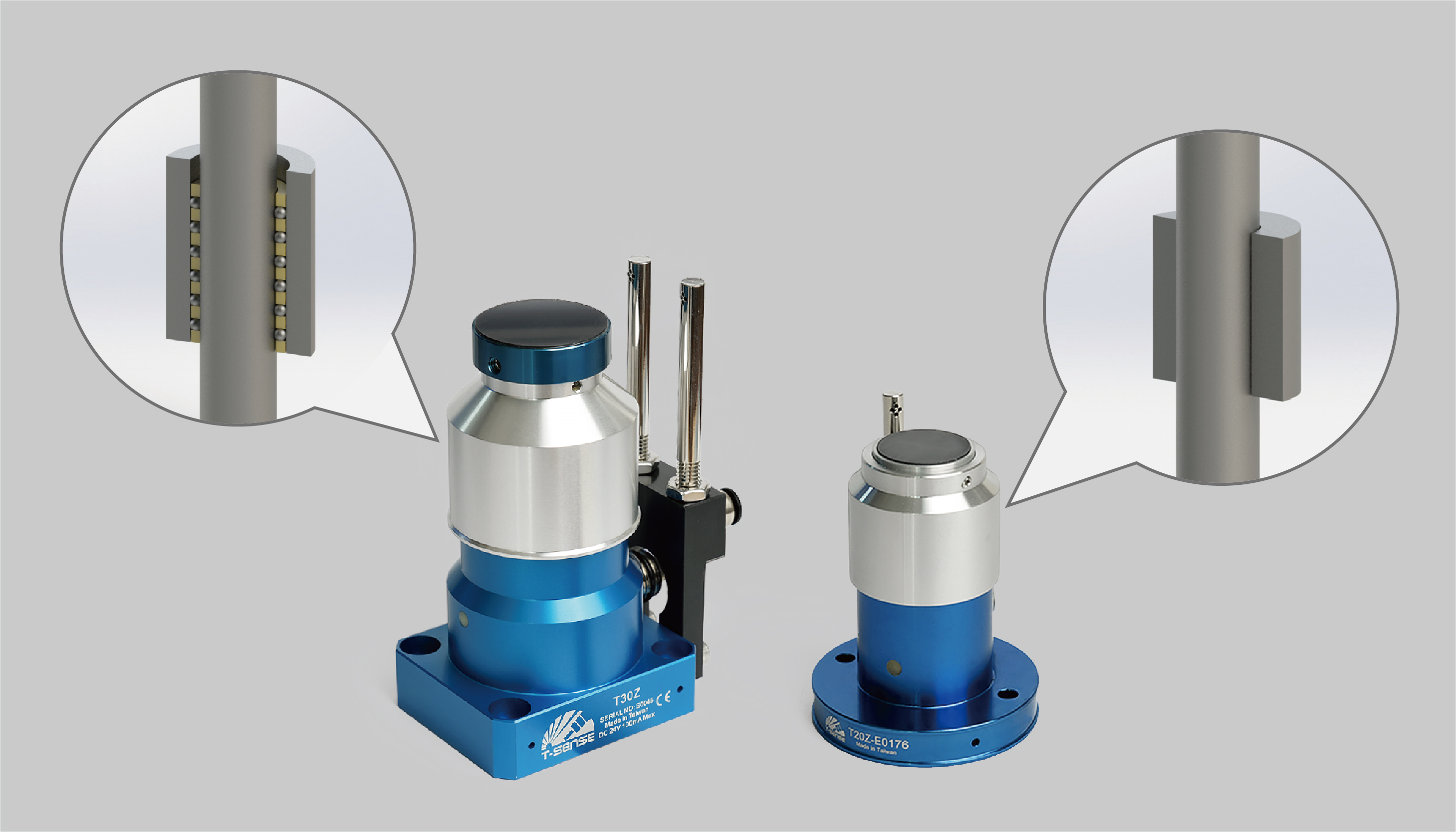
▲ Left: Linear Ball Bearing; Right: Linear Plain Bearing — The structural difference between the two determines the precision performance of the tool setter
Operating Principles and Differences of the Two Bearings
Linear Plain Bearing (Sliding Friction)
Primarily composed of a shaft and a bushing, it utilizes the direct sliding of the shaft inside the bushing to perform linear displacement. The structure is relatively simple, and the manufacturing cost is lower, but there is continuous metal friction between the two contact surfaces.
Linear Ball Bearing (Rolling Friction)
Tiny steel balls are added between the shaft and the bushing, transforming traditional "sliding friction" into "rolling friction." This significantly reduces friction loss between the contact surfaces, not only improving the smoothness of movement but also effectively extending the service life of the entire structure.
| Comparison Item | Linear Ball Bearing (Rolling) | Linear Plain Bearing (Sliding) |
|---|---|---|
| Friction Type | Rolling friction | Sliding friction |
| Friction Coefficient | Extremely low | Relatively high |
| Movement Smoothness | Excellent | General |
| Long-term Precision Stability | High | Degrades with accumulated use |
| Wear Dust Generation | Extremely low | Direct metal friction, prone to dust |
| Service Life | Long-lasting | Shorter, accelerated wear under high-frequency use |
| Manufacturing Difficulty | High (precision grinding, preload design) | Lower |
Why Is the Traditional "Linear Plain Bearing" a Hidden Concern for Precision?
Tool setters using a Linear Plain Bearing are prone to generating fine dust and wear from direct metal friction as the number of uses accumulates. This wear leads to a decrease in smoothness during operation, which in turn causes sporadic "poor precision" situations.
Core Risk: More seriously, if a poor-quality Linear Plain Bearing is used, it is highly susceptible to fatal problems such as contact surface skew and eccentricity after a period of frequent use. For tool setting operations requiring micron-level precision, this will directly lead to the scrapping of machined products and a surge in defect rates.
In modern CNC machining environments with high-frequency automatic tool changes, a tool setter may perform hundreds or even thousands of measurement actions every day. Facing such high-intensity use, the precision degradation speed of a Linear Plain Bearing will significantly accelerate, making it the most unstable link in the entire automated production line.
The Absolute Advantages and Manufacturing Threshold of Linear Ball Bearings
Compared to sliding designs, tool setters adopting "Linear Ball Bearings" have a longer-lasting service life and extremely high stability. However, linear ball bearings themselves also have strict grade distinctions, and their final performance depends on the following precision processes:
-
Precision Grade of the Steel Balls Themselves
The roundness, surface roughness, and diameter consistency of the steel balls directly determine the lower limit of the bearing's repeatability precision. -
Material Selection and Heat Treatment of the Shaft
Appropriate steel selection and heat treatment processes ensure the hardness, wear resistance, and dimensional stability of the shaft. -
Precise Design of Preload
Appropriate preload can eliminate clearance and improve rigidity, but excessive preload increases friction resistance and shortens lifespan, requiring precise calculation and control. -
Straightness and Roundness of Components
The geometric precision of the shaft and bushing is the prerequisite for ensuring linear motion without deviation. -
Surface Roughness Grade of Bushing Inner Bore Grinding
The grinding quality of the inner bore determines the rolling resistance and consistency of the steel balls, which is a key process affecting the smoothness of the bearing.
T-SENSE's Commitment: Pursuing the Ultimate Tool Setting Craftsmanship
Knowing the decisive impact of bearings on precision, T-SENSE tool setters completely reject compromises, insisting on using the top-tier precision linear ball bearings "self-developed and self-manufactured" by our team. From materials science and structural design to precision grinding, we perfect every detail to ensure that every tool setting provides impeccable smoothness and perfect micron-level precision.
T-SENSE's Quality Philosophy: The quality grades of bearings on the market vary greatly, and procurement costs can differ by several times to dozens of times. T-SENSE chooses not to compromise—we develop and manufacture them ourselves, personally controlling every process detail, because we firmly believe: The quality of the bearing is the lower limit of tool setting precision.
Bearing Configuration Overview of T-SENSE and BALLSUM Products
According to the design positioning and application scenarios of each product series, the current bearing configurations of T-SENSE and BALLSUM brands are as follows:
※ Regardless of the bearing type used, the bearings of all products under T-SENSE undergo strict quality control to ensure optimal precision and durability performance within their design specifications.
Conclusion: Bearing Selection Determines the Precision Ceiling of Tool Setters
The linear bearing is the precision core of the tool setter, and its type and quality directly determine the precision stability and service life of the equipment under long-term, high-frequency use. With their rolling friction mechanism, linear ball bearings have obvious advantages in tool setting precision and long-lasting durability, making them the first choice for high-precision application scenarios.
T-SENSE takes self-developed precision linear ball bearings as its core competitiveness, injecting top-tier core quality into every tool setter. Choosing T-SENSE means choosing precision craftsmanship that never compromises, even in places you can't see.
To learn more about T-SENSE tool setter products, please visit the Products Overview page, or contact us directly for professional consulting.
Find the Ideal Tool Setting Solution for Your Precision Machining
Get in touch with T-SENSE today. We provide tailored product recommendations and customization services to suit your production requirements.
Contact Us for Professional ConsultingFrequently Asked Questions (FAQ)
Q1: What is the core difference between a linear ball bearing and a linear plain bearing in a tool setter?
A linear plain bearing utilizes the direct sliding of the shaft inside the bushing (sliding friction), which is prone to generating wear dust after long-term use, leading to decreased precision. A linear ball bearing, on the other hand, adds tiny steel balls between the shaft and the bushing, transforming sliding friction into rolling friction. This significantly reduces friction loss, providing the tool setter with a longer service life and more stable precision performance.
Q2: Why does a linear plain bearing affect the measurement precision of a tool setter?
As the number of uses accumulates, direct metal friction is prone to generating fine dust and wear, which leads to a decrease in smoothness during operation, and in turn causes sporadic poor precision. If a poor-quality bearing is used, problems such as contact surface skew and eccentricity are more likely to occur, seriously affecting tool setting operations that require micron-level precision and directly leading to a surge in machining defect rates.
Q3: Which T-SENSE products use linear ball bearings and which use plain bearings?
T-SENSE's T30Z series and BALLSUM's BT20 series are fully equipped with precision linear ball bearings. T-SENSE's T20Z series and BALLSUM's BTF and BT12 series are equipped with precision ground linear plain bearings. All product bearings undergo strict quality control to ensure optimal performance within their design specifications.
Q4: How is the quality grade of a linear ball bearing determined?
The final performance of a linear ball bearing depends on: the precision grade of the steel balls themselves, the material selection and heat treatment of the shaft, the precise design of preload, the straightness and roundness of components, and the surface roughness grade of the bushing inner bore grinding. T-SENSE adopts a self-developed and self-manufactured approach, personally controlling every process detail to ensure top-tier bearing quality.