What Is a Skip Signal?
In CNC precision machining, the "Skip Signal" is the critical core enabler of high-speed, automated measurement. From workpiece probing to automatic tool setting, all such operations rely on this signal to instantly trigger the controller at the moment of contact, accurately capturing the current coordinate position.
However, different CNC controller brands define their own proprietary specifications for the hardware terminals and PLC interface of their Skip Signals. The T-SENSE tool setter, thanks to its exceptional electronic circuit design and comprehensive compatibility testing, seamlessly adapts to the high-speed measurement terminals of all three major global CNC controllers. With ultra-low-latency signal transmission, it ensures every measurement achieves the highest micron-level accuracy.
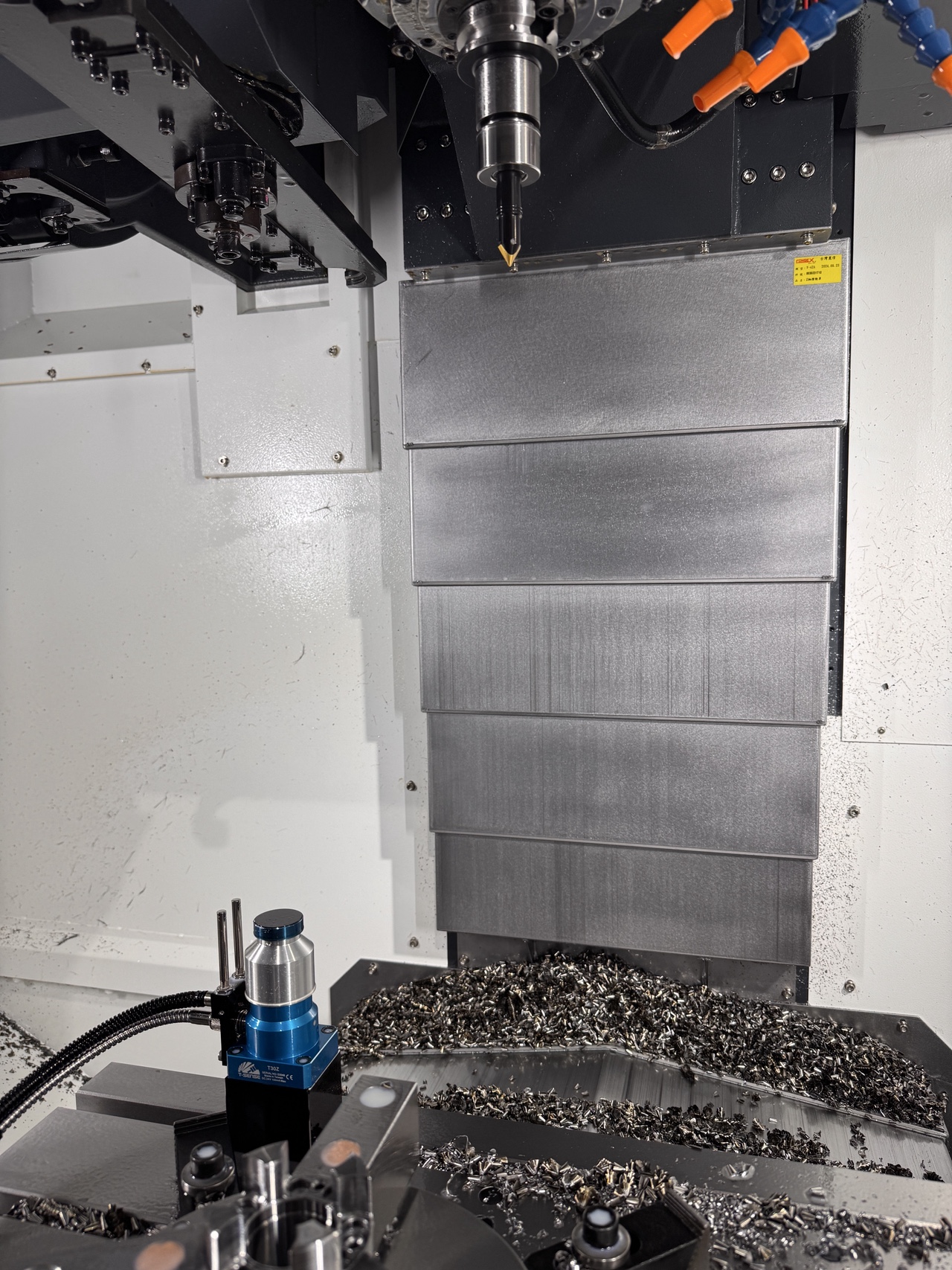
Skip Signal Interfaces of the Three Major Controllers and Seamless Adaptation with T-SENSE Tool Setters
1. FANUC
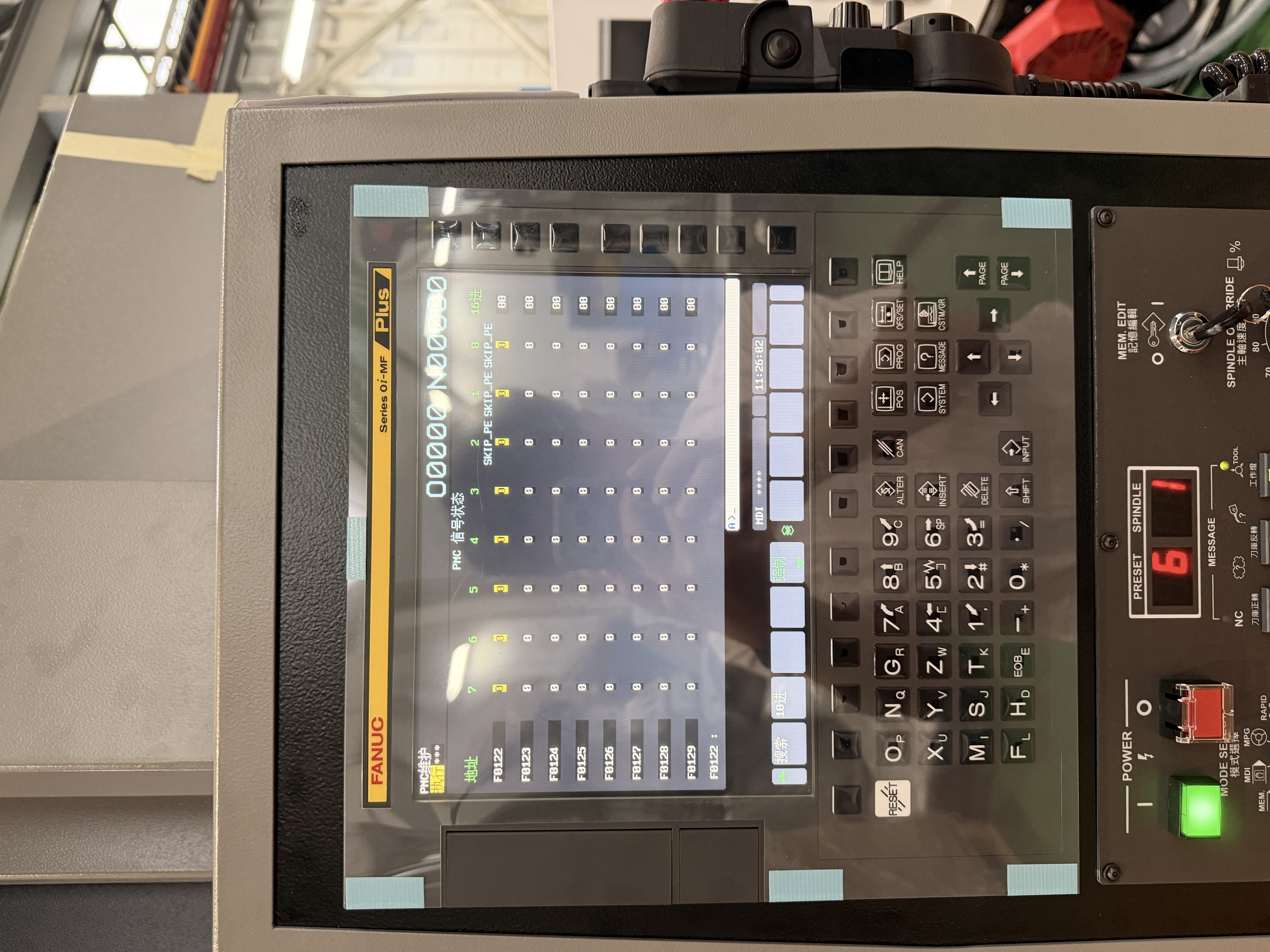
FANUC systems divide Skip Signals into "Standard Skip" and "High-Speed Skip (HDI)" to serve different application scenarios.
Standard Skip Terminal: The most common default configuration is X4.7, triggered via the G31 skip command, suitable for general accuracy measurement.
High-Speed Skip (HDI): For high-speed precision measurements requiring microsecond (μs)-level response, the system enables hardware-based high-speed direct input (HDI). T-SENSE tool setters can connect directly to designated HDI terminals (e.g., X1004.7), delivering near-zero coordinate capture error and unlocking the full high-speed measurement potential of the controller.
2. Mitsubishi
In mainstream Mitsubishi M70/M80 series controllers, the Skip Signal is defined within the PLC interface as the "Skip Input."
Terminal Definition: In standard PLC configuration, the primary Skip Signal terminal is typically assigned as X18 (or X018).
Efficient Integration: T-SENSE tool setters connect directly to this commonly defined terminal, enabling stable, high-speed tool setting cycles on Mitsubishi platforms without complex PLC modifications.
3. Siemens
In high-end Siemens controllers (such as Sinumerik 828D / 840D sl), this function is strictly defined as "Measuring Inputs"—hardware-level high-speed signal acquisition channels.
1st Probe: The system typically connects the first measurement device to a designated high-speed digital input terminal, commonly the X142 interface.
2nd Probe: The controller unit provides a second set of high-speed input ports to support stable operation of multiple measurement devices.
Professional Compatibility: The signal characteristics of T-SENSE tool setters have been optimized for Siemens X142 and similar high-speed interfaces, ensuring precise signal transmission matching with instantaneous, reliable triggering.
Conclusion: Equip Your CNC Machine with a High-Performance Measurement Solution
The T-SENSE tool setter not only delivers outstanding mechanical trigger stability and repeatability but has also undergone rigorous adaptation for the critical electrical signal integration—covering FANUC HDI high-speed channels, the standard Mitsubishi X18 definition, and the Siemens X142 hardware interface.
Regardless of which mainstream controller you use, T-SENSE provides a zero-latency, high-precision automatic tool setting solution for your machine tools, effectively improving production yield rates and overall efficiency.
Unlock a Higher Level of Automated Measurement Capability for Your CNC Equipment
Contact T-SENSE today. We will provide the most professional tool setter recommendations and customization services based on your controller model and machining requirements.
Contact Us for Expert Consultation